
Rehabilitating Main Sewer Lines Without Extensive Digging
When a main sewer line fails under a shopping center, apartment complex, or busy road, digging it out means closed lanes, torn-up parking, and weeks of disruption. Palmetto Pipe Lining provides large diameter CIPP sewer lining in West Ashley, SC, rebuilding damaged pipe from the inside so the surface above it can stay in use. Every project starts with understanding the pipe’s condition, so the rehabilitation plan is built around what the line actually needs and how the property operates.
Call (843) 905-3367 to request a pipe evaluation.
Call (843) 905 3367
Schedule Service
What Is Large Diameter CIPP Lining?
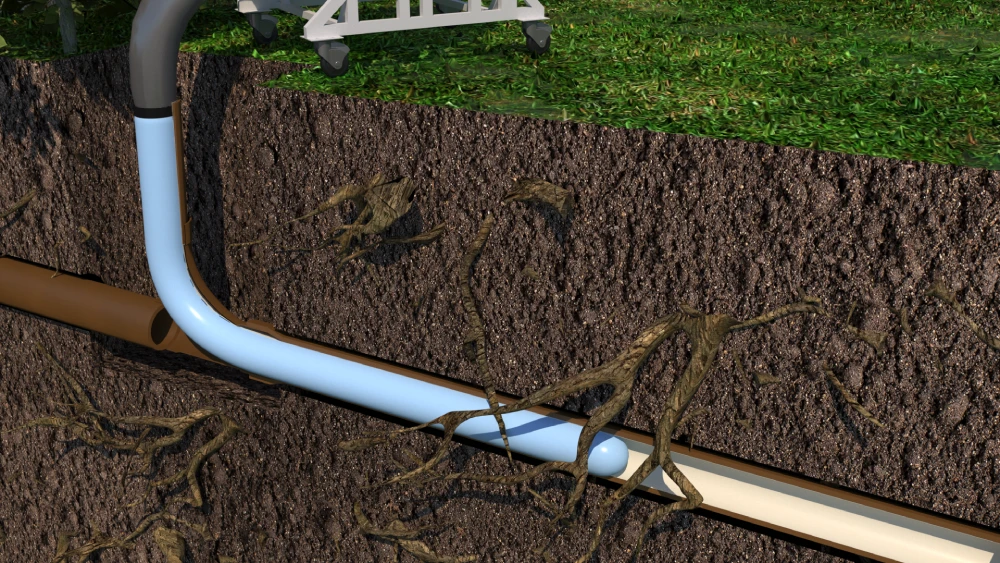
Large diameter CIPP lining forms a new, seamless pipe inside an existing main sewer line using a resin-saturated liner that hardens in place. The process is the same cured-in-place approach used on smaller lines, but scaled to mainline and collection pipes far bigger than the 4-inch and 6-inch laterals that serve most homes.
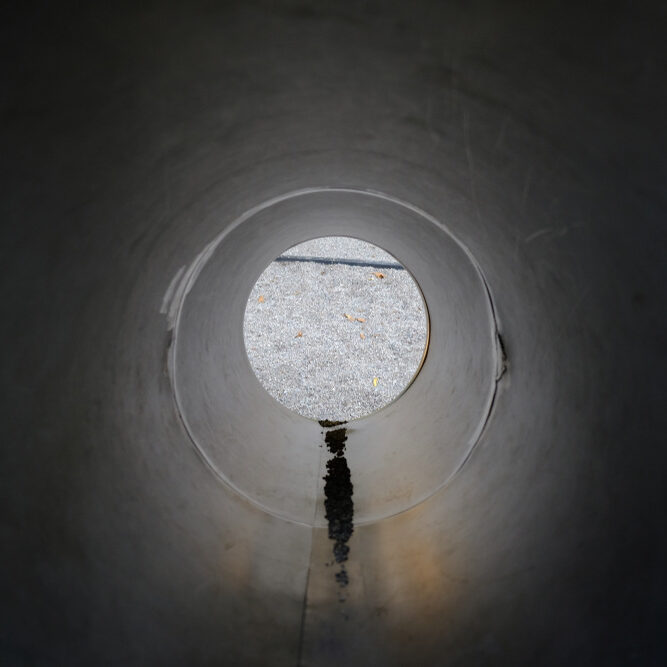
The finished liner seals cracks, closes leaking joints, and creates a smooth interior surface. Because it’s built inside the host pipe, it can restore a line without excavating its full length.
Which Properties Need Large Diameter Sewer Rehabilitation?
Large diameter lines usually carry flow from many units, buildings, or connections at once. In West Ashley, that often includes:
A failed main can shut down a whole building, so how the line gets repaired matters.
What Damages Large Sewer Mains in West Ashley?
Most large sewer mains fail gradually from a combination of age, corrosion, infiltration, and ground conditions.
Corrosion Inside Concrete Pipe
Sewage releases hydrogen sulfide gas. In a concrete sewer pipe, that gas can turn into sulfuric acid on the pipe’s upper walls and slowly eat away at the concrete. Over time, the crown of the pipe thins and weakens.
Joint Separation and Infiltration
Older mains are built from sections joined together. As joints loosen, groundwater can seep in. West Ashley’s low elevation and high water table make infiltration a common issue, especially after heavy rain and during high tides. That extra water takes up capacity the pipe was designed to use for wastewater.
Root Intrusion
Live oaks and other mature trees are common throughout West Ashley’s established neighborhoods and commercial sites. Their roots follow moisture into loose joints and cracks, narrowing the pipe and widening the openings over time.
Ground Movement
Soft coastal soils can settle around buried pipe, stressing joints and causing sections to shift out of alignment.
How Does Large Diameter CIPP Lining Work?
A large diameter lining project follows a planned sequence, starting with inspection and ending with verification.
Why Choose Lining Over Excavating a Main Line?
For large mains, excavation often means more than a trench. It can involve closing traffic lanes, cutting through parking lots, removing landscaping, and working around other buried utilities. Lining works through access points instead, so most of the surface stays in place.
Property owners and managers usually look at lining for a few practical reasons:
Is Every Large Sewer Line a Good Candidate for Lining?
No. Lining needs a host pipe that still holds its basic shape. A camera inspection determines whether a line is a good fit.
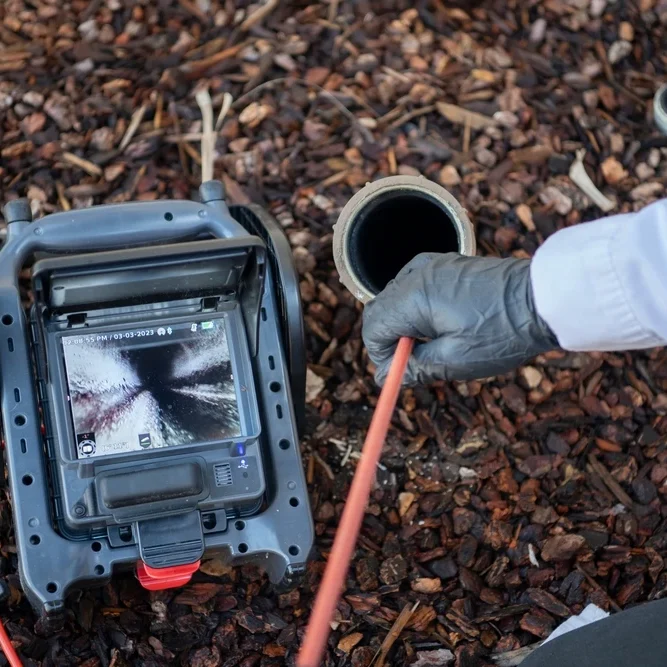
Lining is usually a strong option when a pipe has cracks, leaking joints, root intrusion, or corrosion but still holds its shape and has a clear path for the liner. Sections that have collapsed or are badly deformed may need a different approach. We’ll review the inspection footage with you and explain what it shows before recommending a plan.
How Do We Plan Around Your Property’s Operations?
Large diameter rehabilitation affects more people than a single-family repair, so planning matters. Before work begins, we look at:
The schedule is built around how your property runs, not the other way around.
Why West Ashley Trusts Palmetto Pipe Lining
Palmetto Pipe Lining is family-owned, locally owned and operated . As a full-service trenchless company, we handle the inspection, cleaning, and lining on your project.
Frequently Asked Questions
Ownership usually depends on where the line runs and who it serves. Lines inside a private complex or campus are often the owner’s responsibility, while public mains are typically maintained by the local utility, so check with the utility or your property records to be sure.
Lining follows the existing path of the pipe, so it seals a sagging section but doesn’t remove the sag. If standing water in a low spot is causing backups, the camera inspection will show whether that section needs a separate repair first.
Any as-built drawings, past inspection footage, maintenance records, and a history of backups or overflows are helpful. They give us a starting point for planning the inspection.
Some resins give off an odor while curing, mostly near manholes and building connections. It fades once the liner has hardened. Keeping floor drains and fixture traps filled with water helps keep it out of the building.
The liner adds a thin wall inside the pipe, which slightly reduces its diameter. Its smooth, jointless surface often helps offset that reduction.
Request a Pipe Evaluation
If backups, infiltration, or aging pipe are affecting a shared sewer main on your property, the first step is seeing exactly what’s happening inside it. For large diameter CIPP sewer lining in West Ashley, SC, call Palmetto Pipe Lining at (843) 905-3367.